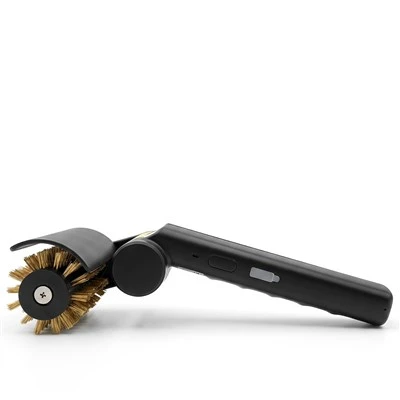
Hey there! As a supplier of BLDC handheld vacuum cleaners, I've seen firsthand how the battery type can really mess with the charging time. Let's dig into this topic and see what's what.
First off, let's talk about the common battery types you'll find in these vacuums. The main ones are Nickel - Metal Hydride (NiMH) and Lithium - Ion (Li - Ion). Each of these has its own quirks when it comes to charging.
NiMH batteries have been around for a while. They're known for being relatively affordable and having a decent energy density. But when it comes to charging time, they can be a bit of a pain. NiMH batteries typically have a lower charge acceptance rate compared to Li - Ion batteries. This means that they can't take in charge as quickly.
For example, a NiMH battery in a BLDC handheld vacuum cleaner might take anywhere from 3 to 8 hours to fully charge. That's a long time to wait, especially if you're in a hurry to clean up a mess. The reason for this slow charging is due to their internal chemistry. NiMH batteries generate a fair amount of heat during the charging process. To prevent overheating and damage to the battery, the charging rate has to be kept relatively low.
On the other hand, Li - Ion batteries are like the cool kids on the block. They've become the go - to choice for most modern BLDC handheld vacuum cleaners. Li - Ion batteries have a much higher charge acceptance rate. This allows them to charge much faster than NiMH batteries. A Li - Ion battery in a similar vacuum cleaner can often be fully charged in just 1 to 3 hours.
One of the reasons for this fast charging is that Li - Ion batteries have a more stable internal chemistry. They generate less heat during charging, so the charger can pump in the electricity at a higher rate without causing any damage. Also, Li - Ion batteries have a lower self - discharge rate. This means that they can hold their charge for longer periods when not in use. So, even if you charge your vacuum cleaner and then don't use it for a few weeks, the battery will still have a decent amount of juice left.
Now, let's look at how this impacts the user experience. If you're using a NiMH - powered BLDC handheld vacuum cleaner, you have to plan your cleaning sessions in advance. You can't just quickly grab it and start cleaning whenever you see a mess. You have to make sure that the battery is fully charged, which might mean waiting several hours.
For example, say you spill something on the floor. You look at your NiMH - powered vacuum cleaner, but it's low on charge. You'll have to wait for a few hours before you can clean up the mess. This can be really frustrating, especially if you have guests coming over or if the spill is something that could stain.
In contrast, a Li - Ion - powered vacuum cleaner gives you much more flexibility. You can charge it overnight, and it'll be ready to go in the morning. If you have a sudden mess to clean up during the day, you can just grab the vacuum cleaner and start cleaning right away. This is a huge advantage for busy households or people who need to clean up quickly.
Another factor to consider is the charging infrastructure. Li - Ion batteries are more compatible with fast - charging technologies. Some Li - Ion - powered BLDC handheld vacuum cleaners come with fast - charging docks that can cut the charging time even further. These fast - charging docks use advanced charging algorithms to safely deliver a high amount of power to the battery in a short period.
NiMH batteries, however, don't have the same level of support for fast - charging. The charging technology for NiMH batteries is more basic and has to be more conservative to avoid overheating and other issues. So, if you're looking for a vacuum cleaner that can charge up quickly, a Li - Ion battery is the way to go.
Now, let's talk about the cost. Li - Ion batteries are generally more expensive than NiMH batteries. This is because the materials used in Li - Ion batteries are more costly, and the manufacturing process is more complex. As a supplier, I understand that cost is an important factor for many customers. But when you consider the benefits of fast charging and longer - lasting charge, the extra cost of a Li - Ion - powered vacuum cleaner might be worth it in the long run.
If you're in the market for a BLDC handheld vacuum cleaner, you might be interested in some of our products. We have the Air Pump Vacuum Cleaner, which is a great all - around cleaner with a Li - Ion battery for fast charging. Our Mini Powerful Vacuum Cleaner is perfect for small spaces and also comes with the advantage of a Li - Ion battery. And if you need to clean your car, our Cordless Car Vacuum Cleaner is a great option with fast - charging capabilities.
In conclusion, the battery type of a BLDC handheld vacuum cleaner has a significant impact on its charging time. NiMH batteries are slower to charge but are more affordable, while Li - Ion batteries charge quickly and offer more convenience but come at a higher cost. As a supplier, I always recommend considering your cleaning needs and budget when choosing a vacuum cleaner.
If you're interested in purchasing our BLDC handheld vacuum cleaners or have any questions about the battery types and charging times, feel free to reach out to us for a purchase negotiation. We're here to help you find the perfect vacuum cleaner for your needs.


References:
- Battery University: A great resource for understanding battery chemistries and charging processes.
- Industry reports on handheld vacuum cleaner technologies.