What is the air - flow direction of a Portable Turbo Fan?
As a supplier of portable turbo fans, I've encountered numerous inquiries from customers about the air - flow direction of these innovative devices. Understanding the air - flow direction of a portable turbo fan is crucial as it not only affects its functionality but also how effectively it can be used in various scenarios.
To begin with, let's delve into the basic principles behind the air - flow generation in a portable turbo fan. At the heart of a turbo fan is a high - speed turbine mechanism. When the fan is powered on, the motor drives the turbine to spin at extremely high speeds. As the turbine rotates, it sucks in air from the surrounding environment through the intake vents. These intake vents are usually located on the sides or the back of the fan, depending on the design.


The air that is drawn in is then accelerated by the spinning turbine blades. The shape and angle of these blades are carefully engineered to maximize the air - flow rate and pressure. Once the air has been accelerated, it is forced out through the front of the fan in a concentrated and powerful stream. This is the general pattern of air - flow in most portable turbo fans.
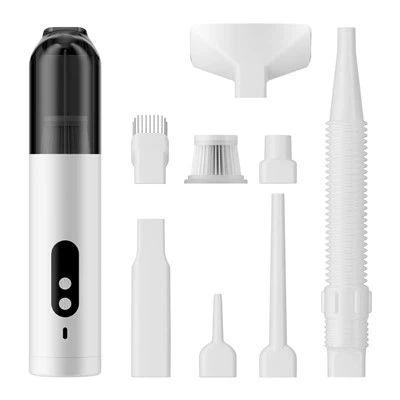
The forward - directed air - flow is a key characteristic of portable turbo fans. This unidirectional flow allows the fan to deliver a strong and focused blast of air, which is ideal for a variety of applications. For instance, in the case of a Handheld Turbo Jet Fan, the forward - directed air - flow makes it perfect for tasks such as drying wet surfaces quickly. You can easily aim the fan at a wet floor, a pool of water, or a damp piece of clothing, and the powerful air stream will rapidly evaporate the moisture.
In addition to drying, the forward - directed air - flow can also be used for cleaning purposes. A Turbo Jet Fan Duster utilizes the concentrated air - flow to blow away dust and debris from hard - to - reach places. You can use it to clean the crevices of electronic devices, the vents of a computer, or even the dust on the shelves in your home. The high - pressure air stream can dislodge dirt and dust particles, making cleaning a much easier task.
The air - flow direction of a portable turbo fan also has implications for its cooling capabilities. The focused blast of air can be directed towards a person or an object to provide instant cooling. A Cordless Turbo Jet Fan is especially convenient for this purpose as it can be easily moved around. You can point it at yourself on a hot summer day to feel a refreshing breeze, or use it to cool down a small electronic device that might be overheating.
However, it's important to note that some advanced portable turbo fans may have adjustable air - flow features. These features allow users to change the direction and angle of the air - flow according to their specific needs. For example, some fans can be tilted up or down, enabling the air - flow to be directed either towards the ceiling for general air circulation or towards the floor for targeted drying or cleaning.
Furthermore, certain portable turbo fans may also have a diffuser attachment. When attached, the diffuser spreads out the air - flow, making it less concentrated but covering a wider area. This is useful when you need to circulate air in a larger space, such as a small room or a workshop.
When choosing a portable turbo fan, it's essential to consider your intended use cases. If you primarily need a fan for targeted tasks like drying or cleaning, a fan with a strong forward - directed air - flow would be the best choice. On the other hand, if you need to circulate air in a larger area, a fan with adjustable air - flow or a diffuser attachment would be more suitable.
As a supplier, we offer a wide range of portable turbo fans to meet the diverse needs of our customers. Our fans are designed with the latest technology to ensure optimal air - flow performance. Whether you're looking for a handheld fan for personal use or a more powerful fan for industrial applications, we have the right product for you.
If you're interested in learning more about our portable turbo fans or would like to place an order, we encourage you to get in touch with us. We're more than happy to provide you with detailed product information, answer any questions you may have, and discuss the best - fitting solutions for your specific requirements. Starting a procurement negotiation with us can lead you to acquire high - quality portable turbo fans at competitive prices.
In conclusion, the air - flow direction of a portable turbo fan is typically forward - directed, which enables it to deliver a powerful and concentrated blast of air. This characteristic makes it highly effective for various tasks such as drying, cleaning, and cooling. By understanding how the air - flow works and choosing the right fan for your needs, you can make the most of these versatile devices.
References
- Bernoulli, D. (1738). Hydrodynamica.
- Anderson, J. D. (2007). Fundamentals of Aerodynamics. McGraw - Hill Education.
- Horlock, J. H. (1973). Axial - Flow Compressors: Fluid Mechanics and Thermodynamics. Elsevier.